


Calculous prostatitis is a rare form of the disease that requires specific treatment.Therefore, it is important to know how it happens and what signs it is accompanied by.From this article you will learn all the characteristics of the disease.As well as methods of diagnosis and treatment.
Calculous prostatitis is characterized by an inflammatory process in which conglomerates of dense structure are formed.In other words, these are stones located in the prostate.They consist of elements that enter the male body.They arise in prostate secretion against the background of chronic prostatitis and pathological disorders.
Causes
The cause of calculous prostatitis may be:
- Infection of the genitourinary system.These can be diseases such as chlamydia, gonorrhea, trichomoniasis, ureaplasmosis, etc.In the process of reproduction and activation of pathological microorganisms, obstruction is observed in the prostate ducts, against the background of which the secretion acquires a thick and viscous structure.Thus, bacteria create a favorable environment for the formation of stones, and prostatolites contribute to increasing inflammatory processes, which causes the development of congestion in the prostate.
- Stagnation of all processes in the gland, which occurs for various reasons - the presence of an adenoma (benign tumor) in the prostate, inactivity, the influence of unhealthy foods, abuse of alcoholic beverages, smoking.But most often the reason lies in the lack of regular sex life, because in this case the glands cannot empty the stones normally, which is why stagnation occurs.
- Urethral-prostatic reflux.With this disease, small doses of urinary fluid are released into the prostate during urination.As urine accumulates, crystallized salts are released, which over time enlarge and thicken, turning into stones.Urethral-prostatic reflux develops due to damage to the urethra, with prostate atony, prostate resection, etc.
- Impaired blood circulation in the pelvic organs also leads to stagnation.
- Frequent hypothermia of the body and genitals.
- Failure to observe personal hygiene causes infection, which leads to calculous prostatitis.
- Old age.This is due to the fact that a kind of layer of phosphoric acid and lime is formed on the condensed epithelium and amyloid bodies.
The stony formations have a yellowish tint and a spherical shape.The minimum size of prostatolites is 0.25 cm, the maximum size is 0.4.They form singly or in multiples and are mainly of the following types: phosphate stones, oxalate stones or urate stones.
Symptoms
The presence of prostatolites in the prostate is indicated by the following signs:
- dull, aching pain in the perineum, groin, coccyx, scrotum;
- increased pain after physical activity, bowel movements, sexual intercourse, prolonged sitting in one position;
- sharp pain when urinating;
- jet intermittency;
- frequent urge to retain urine;
- blood particles in urine and semen;
- premature ejaculation;
- weakening of power;
- increased body temperature;
- insomnia;
- decreased appetite;
- psycho-emotional instability.
Stages of bacterial prostatitis
- Primary or catarrhal.In the primary form, stones form in the acini or ducts of the prostate.Catarrhal-type symptoms are mild, the signs resemble those of a cold.If you consult a urologist in a timely manner and start adequate treatment, you can get rid of the disease within a week.
- Secondary or follicular.In secondary form, prostatolites enter the organ from the kidneys, bladder and other elements of the body against the background of urolithiasis.The follicular type can develop after an untreated catarrhal type.The manifestations are acute, with an increase in body temperature and suppuration, the duration of treatment is long.
- Tertiary or parenchymal.In the tertiary form, the prostate parenchyma is affected, which is why it is called (diffuse) parenchyma.This is the last stage of the acute course, during which the symptoms are very acute.Purulent exudate forms on the inflamed area.The treatment process is long, tolerance is difficult.
Possible complications of calculous prostatitis
What are the complications of untreated calculous prostatitis:
- prostate abscess due to the accumulation of purulent fluid in the tissues;
- intoxication of the body with purulent formations and subsequent development of sepsis leading to death;
- prostate atrophy and, as a result, impotence;
- vesiculitis in acute or chronic form, characterized by dilation of the blood vessels of the spermatic cord, leading to impotence and infertility;
- cystitis and urinary incontinence.
To avoid such consequences, as soon as you notice the first signs, you should go to the clinic and undergo a complete examination.
How to relieve a crisis at home?
It is quite clear to any sane person that during an attack it is necessary to call an ambulance.But before it arrives, you can take painkillers regularly.If you have propolis-based rectal suppositories in your medicine cabinet, perform the appropriate procedure.Pain relief and laxative tablets.
Which doctor treats you?
A urologist (or andrologist) treats prostatitis in all its forms.Other highly specialized doctors are also involved in the process of diagnosis and selection of treatment tactics - nephrologist, infectious disease specialist and others, depending on the cause of stone formation.
Diagnosis
During the first visit to the urology office, the doctor conducts a palpation and visual examination, after which he takes an anamnesis.Lifestyle, the presence of certain pathologies and the nature of the symptoms that appear must be taken into account.The following diagnostics are carried out:
- sampling of blood and urine for general analysis in order to identify the quantitative number of structural units (composition of biological fluids);
- collection of seminal fluid (spermatozoa in calculous type of prostatitis are characterized by an increased amount of epithelial tissue and amyloid bodies);
- the spermogram makes it possible to study the degree of motility and the number of spermatozoa;
- prostate x-ray;
- ultrasound examination of the prostate;
- computed tomography or magnetic resonance imaging.
It is obligatory to take blood for PSA, which makes it possible to identify a specific prostate antigen (a sort of prostate tumor marker).
Treatment of calculous prostatitis
The duration of treatment and the choice of therapeutic measures depend on the degree of neglect of the disease, as well as on the form, cause of its development and the presence of complications.
Drug treatment
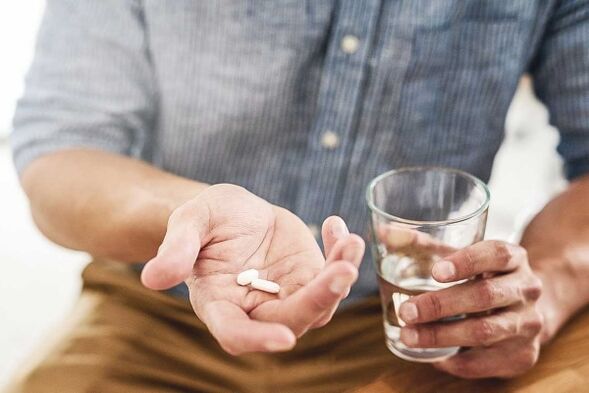
- Fluoroquinolone group for the destruction of pathogenic microbes, most often responsible for prostatitis.These are antibiotics that easily fight many pathogens.
- Penicillin group of antibacterial agents.
- Tetracycline group of antibiotics.However, tetracyclines have a large number of side effects, so they are prescribed less frequently than other groups.
- Cephalosporins are used intramuscularly.
- Nonsteroidal anti-inflammatory drugs relieve pain and eliminate inflammation.
- The patient must take vitamin complexes to strengthen the immune system.
Surgery
- Transurethral electroresection allows you to remove stones and cauterize blood vessels.For this, high-frequency electric current and a resectoscope are used, which are inserted through the urethral lumen.The operation is painless, but it is possible that prostatolite particles remain.
- Transurethral surgery guided by ultrasound.Unlike the previous method.Thanks to increased ultrasound monitoring, all stone formations are eliminated.
- Strip prostatectomy (the stones are removed by cutting) and endoscopic (using an endoscope inserted into the prostate).Along with advanced calculations, resection of the prostate, lymph nodes and seminal vesicles is performed.
- Lithotripsy involves the use of a laser that crushes the stones, after which they are removed naturally.An endoscope is used for this.
Physiotherapy
- ultrasound exposure reduces the level of inflammation, relieves pain;
- laser therapy accelerates metabolic processes in the prostate and relieves discomfort;
- magnetic therapy restores blood circulation and neutralizes swelling.
Massage normalizes the patency of the ducts, accelerates blood supply, which is considered effective for prostatitis, but for the calculous form it is strictly prohibited.The reason is that prostatolites can move throughout the body.
If you cannot attend physiotherapeutic procedures, you can perform them at home using special devices.But keep in mind that physiotherapy is effective only during remission - when prostatitis is in the acute stage, the use of devices is prohibited.
Diet therapy
A patient diagnosed with calculous prostatitis must follow a special diet, developed by a nutritionist at the individual level, depending on the severity of the pathology.
The basis of diet nutrition is to avoid alcoholic and carbonated drinks, fried, smoked, salty and spicy foods.It is undesirable to use broths made from fatty meat, fish and mushrooms.From vegetables you will need to exclude horseradish, radish, garlic, cabbage, beans and onions.And other products leading to gas formation.
Therapeutic exercise
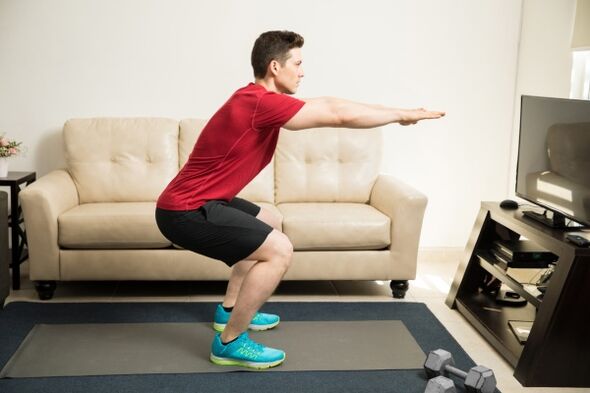
It is still used for prostatitis, but with the calculous form, exercise should be light to avoid movement of the stones.Gymnastics should stretch the muscles of the perineum.To do this, you can do the following exercises at a slow pace:
- Stand in front of the chair and place your hands on the backrest.Place one leg out to the side, lifting it as high as possible.Lower the limb.The same actions are performed with the other leg.Number of approaches – 8-10.
- Stand with your back to the chair and lean on it.Lift your legs up to your stomach one by one, bending them at the knees.
- Spread your legs wider than your shoulders, squat down and hold the position for a few seconds.Get up.While doing the exercise, try doing springy movements while squatting.Do not repeat more than 5 times.
Folk remedies
- Eat 25 to 30 raw pumpkin seeds every day, always on an empty stomach.
- Herbal decoction.You will need an equal proportion of bare ostudnik and black initial letter.Separate 1 tbsp.L.herbs, pour 0.5 liters of “steep” boiling water, let it brew.Take 100 mg 3 times a day half an hour before meals.
- Infuse the brown rosehip root according to the recipe indicated on the pharmacy packaging.Drink as a tea drink three times a day.
- Pour 2 tablespoons into a glass of boiling water.L.parsley seeds and simmer for 10-15 minutes over low heat.Leave for an hour.Drink one tablespoon up to 6 times a day.
- Drink 600 to 1,000 ml of freshly squeezed asparagus juice daily.
- Other natural juices are also useful - carrot, beetroot, cucumber.
Forecast
When treating calculous prostatitis, conservative therapy is initially used, the result of which is usually favorable.In advanced forms and in the absence of positive dynamics of drug treatment, surgery is used.In this case, the prognosis is also favorable.But special attention should be paid to the rehabilitation period in order to prevent infections and other complications.
Prevention measures
To prevent the development of the calculous type of prostatitis and prevent relapses, follow simple rules:
- eliminate bad habits;
- consult a doctor promptly in the event of pathological problems;
- strictly follow the urologist’s instructions;
- don't be too cold;
- to avoid infection, use condoms;
- Have an active sex life with just one partner.